Short Bedtime Stories for Kids with Moral
Six calm, short bedtime stories for kids — each with a gentle moral about kindness, courage, honesty, and friendship. Perfect for ages 3 to 12.

The last twenty minutes of a child's day are unlike any other. The house is quieter. The lights are lower. Their body is ready to rest, but their heart is still open — and open hearts are where lessons land.
That's why short bedtime stories with a moral matter so much. A five-minute tale, told softly, can teach a child more about kindness or courage than a whole day of instructions. There's no lecturing. No "you should have." Just a small story, a small lesson, and a small child drifting off with something good in their head.
Here at Zingy Tales, every story we publish is written to be calm before it's clever. Below is a hand-picked collection of short bedtime stories with morals — the kind you can start after teeth are brushed and finish before eyes close.
Why bedtime is the best time to teach a moral
Psychologists call the moments before sleep the quiet learning window. The prefrontal cortex — the "thinking" brain — slows down. The emotional brain listens more. A gentle story about a kind boy or a brave girl doesn't just entertain; it's absorbed almost like a memory of something that really happened.
The trick is choosing the right kind of story. It should be:
Short — five to ten minutes, so it fits the wind-down.
Calm — no cliffhangers, chase scenes, or scary villains.
Moral without being preachy — the lesson lives inside the story, not in a sentence tacked on the end.
Age-appropriate — a moral about sharing works for a four-year-old; a moral about honesty resonates more at eight.
Every story below fits that shape.
1. The Warmest Mitten — a story about kindness
On the coldest morning of the year, a small girl finds a single lost mitten in the snow. She could keep it. She could take it home. Instead, she does something small and brave that warms far more than one hand.
The moral: Kindness doesn't need to be big to be brave. Even a tiny act — noticed by nobody — can quietly change a stranger's day.
Perfect for ages 3–7, when children are just beginning to understand that other people have feelings that look and behave like their own.
2. The Boy Who Saved a Seat — a story about looking out for others
A boy on the school bus notices the new kid has nowhere to sit. He doesn't announce it. He doesn't make a scene. He just moves his bag and leaves a seat open — and a friendship begins in the quietest way friendships ever do.
The moral: The kindest people are often the quietest. Making room for someone can matter more than making a speech about it.
Wonderful for ages 5–9, especially for children starting school, joining a new class, or worried about being left out.
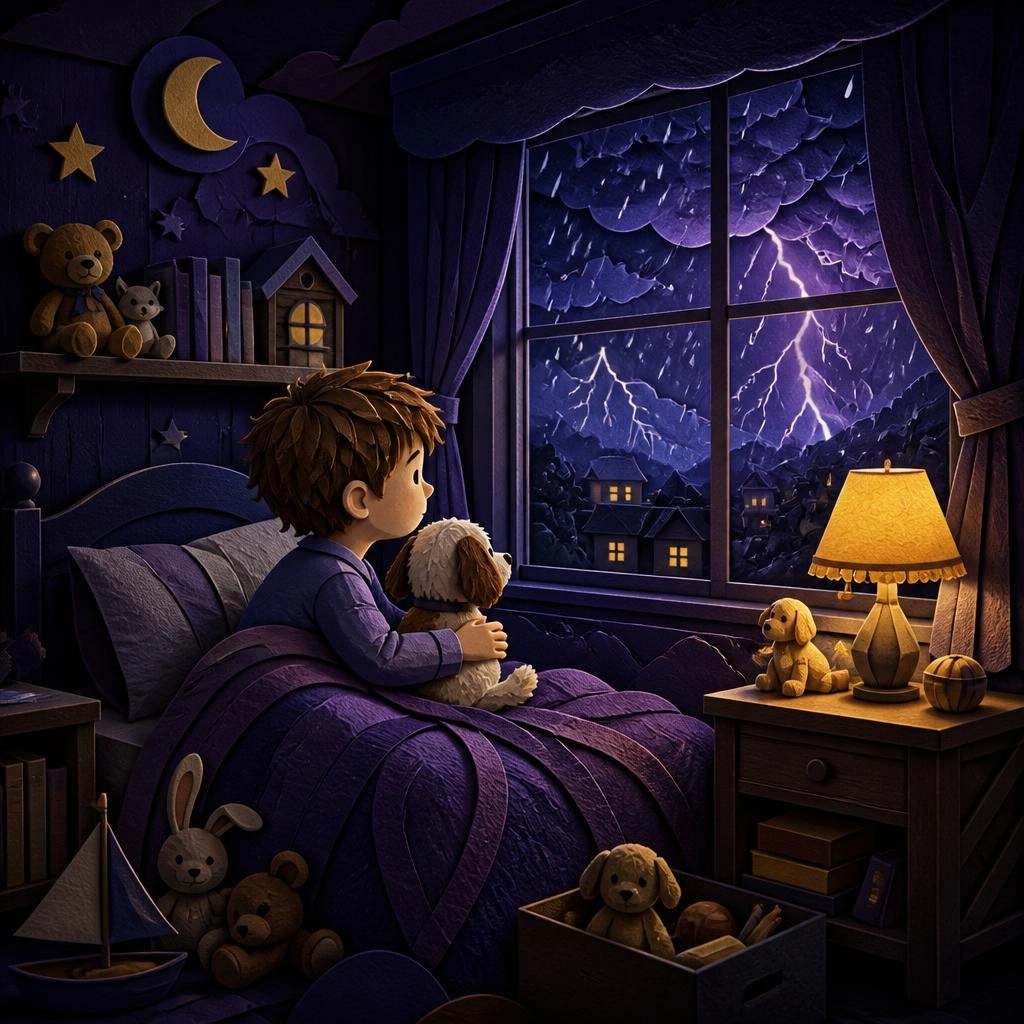
3. Theo and the Thunder — a story about courage
Theo is terrified of thunderstorms. Tonight there's a big one. But instead of hiding under the blanket alone, he discovers that being brave isn't about not being scared — it's about not being scared by yourself.
The moral: Courage isn't the absence of fear. It's what you do while you're still a little bit afraid — and it almost always feels smaller when someone you love is nearby.
Best for ages 4–8. Especially calming during actual storms, unfamiliar noises, or the "monster under the bed" phase.
4. The Lemonade Stand Truce — a story about forgiveness
Two best friends fall out over who does what at their lemonade stand. For a whole afternoon, they don't speak. Then one small pitcher, one warm cup, and one honest word rebuild what a whole day of silence couldn't.
The moral: Saying sorry first isn't losing. It's the fastest way to get your friend back — and friends are worth more than being right.
Just right for ages 5–10, when friendships get bigger and disagreements start to feel like the end of the world.
5. David and Goliath — a story about believing in yourself
A young shepherd boy stands in front of a giant nobody else will face. He doesn't have armour. He doesn't have height. What he has is quiet faith and five smooth stones — and it turns out that's enough.
The moral: Being small is not the same as being weak. The size of your heart matters more than the size of your body — or the size of the problem.
A timeless favourite for ages 5–12. Especially good for a child who feels smaller, younger, or shyer than the people around them.
6. Jonah and the Big Fish — a story about second chances
Jonah is asked to do a hard thing. He runs. He hides on a boat. And when he finally ends up somewhere very unexpected, he learns that running away from the right thing is much harder than doing it in the first place.
The moral: Everyone makes mistakes. What matters is what you do next — and it's almost never too late to turn around.
Meaningful for ages 6–12, when children start understanding responsibility, consequences, and the enormous relief of being forgiven.
How to read a bedtime story so the moral actually sticks
You don't have to explain the lesson. In fact, please don't. Trust the story. But a few small habits help the moral land softly:
Read slowly. Bedtime is not a race. Half your normal reading speed is usually right.
Lower your voice as the story ends. The story should physically sound sleepier as it closes.
Ask one small question afterwards. Not a quiz. Something like "What was your favourite bit?" or "What would you have done?" — and then let them talk without correcting them.
Come back to it later. A week from now, when the moment fits — a small kindness, a scary noise, a friend forgiven — mention the story again. That's when the lesson becomes theirs.
Let us do the reading tonight
Every story above is available to listen to on Zingy Tales — read in calm voices, with gentle music, and with a real sleep timer that fades away when your child drifts off. No ads, no autoplay, nothing scary before bed. Just a small, good story with a small, good moral.
Pick one from the cards below and press play. Goodnight.